
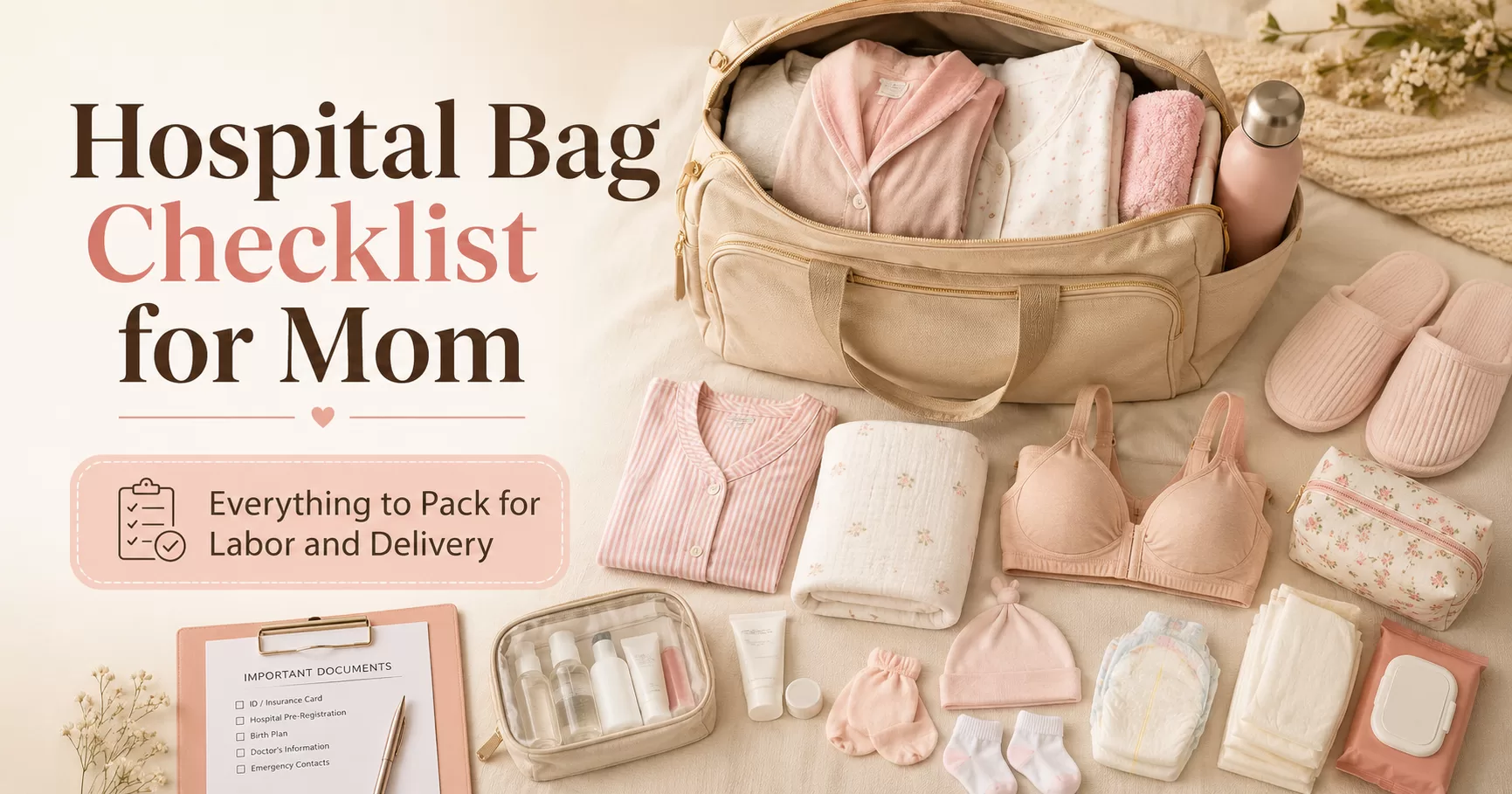
Packing your hospital bag is one of those small but important tasks that makes the final weeks of pregnancy feel more real. Once your due date gets closer, you do not want to be searching for documents, baby clothes, feeding essentials, or postpartum care items at the last minute.
A good hospital bag should be practical, easy to access, and not overloaded with things you may never use. The goal is simple: pack what you need for labor, delivery, recovery, breastfeeding if you plan to breastfeed, and the baby’s first trip home.
Most hospital bag checklists recommend carrying your hospital notes, comfortable clothes, nightwear, toiletries, maternity pads, nursing bras, breast pads, and baby essentials. NHS also lists items like birth notes, loose clothing, slippers, nursing bras, breast pads, and super-absorbent maternity pads as useful items to pack for birth and postpartum stay. Mayo Clinic Health System also recommends carrying personal toiletries, lip balm, glasses if needed, hair ties, comfort items, and small activities in case labor takes time.
This checklist is written for Indian moms who want a clear, useful, and product-focused packing guide before labor and delivery.
When should you pack your hospital bag?
Ideally, keep your hospital bag ready by around 34 to 36 weeks of pregnancy. You may not need it immediately, but having it packed early gives you peace of mind, especially if labor starts earlier than expected.
Keep the bag in an easy-to-reach place at home. You can also keep important documents in a separate folder so they can be picked up quickly. ACOG advises keeping your hospital bag in a handy place as part of preparing for labor.
How many bags should you carry?
Instead of stuffing everything into one large bag, it is easier to divide things into three small sections:
- Mom’s labor and recovery bag
- Baby’s hospital bag
- Partner or attendant bag
You can use a set of labeled organizer pouches like these Hospital Bag Organiser Pouches with Label Stickers to separate baby clothes, mom’s clothes, toiletries, feeding items, and going-home outfits. This makes it easier for your husband, mother, or attendant to find things quickly without opening the entire bag.
Important documents to pack first
Before clothes and products, pack your documents. These are the items you should not forget:
- Hospital registration card or file
- Doctor’s prescriptions
- Pregnancy scan reports
- Blood test reports
- Insurance documents, if applicable
- Aadhaar card or ID proof
- Birth plan, if you have one
- Emergency contact numbers
- A small notebook and pen
Keep these in one folder. Do not mix them with clothes or baby products.
Clothes and comfort essentials for mom
Labor and postpartum recovery can feel uncomfortable, so your clothes should be soft, loose, and easy to change. Avoid tight waistbands, complicated zippers, and anything that is difficult to wear after delivery.
1. Front-open maternity nighty or hospital gown
A front-open nighty is useful because it makes breastfeeding and skin-to-skin contact easier after delivery. It is also more comfortable than regular nightwear, especially during the hospital stay.
Product pick: MENMAII Women’s Full Open Front Buttoned Maternity Nighty
Pack at least two front-open nighties if your hospital stay may be more than one day.
2. Nursing bras
A nursing bra gives better comfort after delivery and makes feeding easier. Choose soft, non-wired bras that do not press tightly against the body.
Product pick: MomToBe Women’s Cotton Feeding Nursing Maternity Bra Pack of 3
Pack two or three nursing bras so you have backups if one gets wet or uncomfortable.
3. Comfortable slippers
Hospital floors can be cold, and you may need to walk to the washroom or around the room after delivery. Carry slippers that are lightweight, non-slip, and easy to wear.
Product pick: DOCTOR EXTRA SOFT Women’s Orthopedic Pregnancy Slippers
Choose slippers that you can wear without bending too much.
4. Cotton socks
Some moms feel cold during or after labor, especially in air-conditioned hospital rooms. A pair of soft socks can help you stay comfortable.
Product pick: Amazon Brand ARIF HUB Women’s Cotton Ankle Socks
Pack one or two pairs.
5. Going-home outfit for mom
Your body will not immediately return to its pre-pregnancy size after delivery. Choose a loose, feeding-friendly dress or kurti that is easy to wear and comfortable for the ride home.
Product pick: Anika Fashion Women’s Cotton Maternity Feeding Dress
A loose maternity feeding dress is usually more practical than jeans or tight leggings.
Postpartum hygiene and recovery essentials
Postpartum bleeding, soreness, sweating, and frequent bathroom trips are normal after delivery. Your hospital may provide some basics, but it is still safer to carry your own essentials.
1. Maternity pads
Regular sanitary pads may not be enough immediately after delivery. Maternity pads are larger and designed for heavier postpartum bleeding. NHS recommends packing super-absorbent sanitary or maternity pads for after birth.
Product pick: LuvLap Extra Absorbent Maternity Pads Pack of 10
Pack at least one full pack in your hospital bag. You can keep extra packs at home for the first few weeks after delivery.
2. Peri bottle
A peri bottle can make washing after delivery easier and gentler, especially if you have stitches, soreness, or discomfort. Use it only as advised by your doctor or nurse.
Product pick: Frida Mom Upside Down Peri Bottle for Postpartum Care
This is not mandatory for everyone, but many moms find it helpful during postpartum recovery.
3. Breast pads
If you are planning to breastfeed, breast pads can help absorb milk leakage and keep your bra and clothes dry. NHS includes breast pads in its hospital bag checklist for moms.
Product pick: LuvLap Ultra Thin Honeycomb Disposable Nursing Breast Pads
Pack a few pairs in a small pouch.
4. Nipple cream
Breastfeeding can feel uncomfortable in the beginning for some mothers. A nipple cream can help soothe dryness or soreness, but check with your doctor or lactation consultant if you have pain, cracking, or latch issues.
Product pick: Lansinoh HPA Lanolin Nipple Cream
Keep it in your toiletry pouch so it is easy to find.
5. Towel
Carry your own towel because hospital towels may not always feel comfortable. A soft cotton towel is useful after a bath or freshening up.
Product pick: JNB Ultra-Absorbent 100% Cotton Bath Towel
Choose a dark or medium color if possible, as it is more practical during the hospital stay.
Toiletries and personal care items
Your toiletry pouch should be simple. Do not overpack your entire skincare routine. Pack only what you will actually use.
A hanging toiletry bag like this PrettyKrafts Hanging Toiletry Bag helps keep items organized in a hospital bathroom or small room.
Pack:
- Toothbrush and toothpaste
- Face wash
- Body wash or soap
- Shampoo sachets or small bottle
- Comb
- Hair ties or clips
- Deodorant
- Lip balm
- Hand sanitizer
- Tissues
For lip balm, you can carry Himalaya Lip Balm 10g, especially because lips can feel dry in air-conditioned rooms or during long labor.
Some links in this guide may help us earn a small commission if you choose to buy through them, at no extra cost to you. The picks are included to make your packing easier and more practical.
Food, water, and small comfort items
Labor can take time, and your attendant may also need basic snacks and water. Ask your hospital what food or drinks are allowed during labor, especially if you are being induced or if a C-section is planned.
Water bottle
A bottle with a straw or sipper can be easier to drink from while lying down or resting.
Product pick: KELVEE FreeSip Water Bottle with Straw
Also pack light snacks for your partner or attendant. For the mother, follow hospital and doctor instructions on what is allowed.
Electronics to pack
Keep electronics minimal but useful.
Pack:
- Phone
- Phone charger
- Power bank
- Earphones
- Small extension cord, if your hospital allows it
Do not forget to save emergency contacts and hospital numbers on your phone before your due date.
Baby essentials for the hospital bag
Some hospitals provide basic newborn supplies, but it is always better to carry a few essentials from home. WHO notes that newborns need warmth, infection protection, normal breathing support, and feeding care in the first days after birth. Your baby’s bag should focus on clean, soft, simple items.
1. Newborn diapers
Carry a small pack of newborn diapers. Do not buy too many before birth because the baby’s weight and size may decide the right fit.
Product pick: Pampers Active Baby Tape Style Diapers Newborn Extra Small
Pack around 8 to 10 diapers for the hospital, unless your hospital has asked you to carry more.
2. Baby wipes
Choose gentle baby wipes that are suitable for newborn skin. Use them only when needed, and follow your hospital’s newborn care instructions.
Product pick: Mee Mee Wet Wipes for Baby Skin with Aloe Vera
Pack one small pack in the baby section.
3. Muslin swaddle
A muslin swaddle is useful for wrapping the baby comfortably and keeping the baby warm. It can also be used as a light blanket, burp cloth, or cover.
Product pick: LuvLap 100% Cotton Muslin Baby Swaddle Set
Pack two swaddles if your hospital stay may be longer.
4. Baby blanket
A soft baby blanket is useful when bringing the baby home, especially if the weather is cool or the hospital room is air-conditioned.
Product pick: LuvLap 100% Muslin Cotton 6 Layer Baby Blanket
Choose a breathable blanket that is suitable for your local weather.
5. Baby cap, mittens, and socks
Newborns need to be kept warm, and mittens can help prevent accidental scratches.
Product pick: Totkart Newborn Baby Cap, Mittens, and Socks Set
Pack one or two sets.
6. Baby towel
If your hospital asks you to carry a towel for the baby, choose a soft muslin or cotton towel.
Product pick: TEDDYIFY 100% Cotton Muslin Baby Hooded Towel
Ask your hospital in advance because some hospitals prefer using their own sterile newborn towels immediately after birth.
What your partner or attendant should pack
Your partner or attendant should also carry a small bag, especially if they will stay overnight.
Pack:
- Extra clothes
- Phone charger
- Water bottle
- Snacks
- Basic toiletries
- Cash and cards
- ID proof
- A small towel
- Any regular medicines
This bag should be separate from the mom and baby bags. During labor, your attendant should be able to access documents, phone, charger, and hospital cash quickly.
Things you should not overpack
It is easy to overpack because every item feels important before delivery. But a hospital room can become messy if you carry too much.
Avoid packing:
- Too many baby outfits
- Heavy makeup
- Expensive jewelry
- Strong perfumes
- Large pillows unless your hospital allows them
- Too many skincare products
- Multiple blankets
- Too many diapers before knowing baby size
Pack for comfort, hygiene, feeding, and recovery. Keep it practical.
Final hospital bag checklist for mom
Use this quick checklist before leaving for the hospital.
Documents
- Hospital file
- Scan reports
- Blood test reports
- ID proof
- Insurance papers
- Doctor prescriptions
- Birth plan, if any
Mom’s clothes
- Front-open maternity nighty
- Nursing bras
- Comfortable slippers
- Cotton socks
- Going-home maternity outfit
Mom’s recovery and hygiene
- Maternity pads
- Peri bottle
- Breast pads
- Nipple cream
- Cotton towel
Toiletries
- Hanging toiletry bag
- Toothbrush and toothpaste
- Soap or body wash
- Face wash
- Comb
- Hair ties
- Lip balm
Food and electronics
- Water bottle with straw
- Phone charger
- Power bank
- Earphones
- Light snacks for attendant, if allowed
Baby essentials
- Newborn diapers
- Baby wipes
- Muslin swaddle
- Baby blanket
- Baby cap, mittens, and socks
- Baby towel
Final thoughts
A hospital bag does not need to be fancy. It needs to be ready, organized, and practical. Focus on the essentials that support labor, delivery, feeding, postpartum recovery, and your baby’s first few days.
Pack early, keep your documents separate, use organizer pouches, and check with your hospital once before your due date. Every hospital has slightly different rules, so your final checklist should match your doctor’s advice and your hospital’s requirements.