
Pregnancy is a beautiful and life-changing journey, but it can also bring many questions. What is happening inside your body? How is your baby growing? Which symptoms are normal? When should you call your doctor?
This pregnancy week-by-week guide takes you through weeks 1 to 40, covering baby growth, common pregnancy symptoms, body changes, and helpful tips for every stage. Whether you are newly pregnant, planning for pregnancy, or already in your second or third trimester, this guide will help you understand what to expect as your pregnancy progresses.
A typical pregnancy is counted as 40 weeks, starting from the first day of your last menstrual period. These 40 weeks are divided into three trimesters. The first trimester runs from week 1 to week 13, the second trimester from week 14 to week 27, and the third trimester from week 28 until birth.
Important note: Every pregnancy is different. Symptoms, baby growth, scan results, and delivery timelines can vary from person to person. This guide is for general information only and should not replace medical advice from your doctor, midwife, or healthcare provider.
Pregnancy Week-by-Week Overview
Pregnancy is usually grouped into three main stages:
First trimester: Weeks 1 to 13
This is when conception happens, implantation occurs, and your baby’s major organs begin to form. Early pregnancy symptoms such as nausea, tiredness, breast tenderness, food aversions, and frequent urination are common during this stage.
Second trimester: Weeks 14 to 27
Many women feel more energetic during the second trimester. Your baby grows quickly, starts moving more, and may become more active. This is also the stage when many parents have the detailed anatomy scan.
Third trimester: Weeks 28 to 40
Your baby gains weight, organs mature, and your body prepares for labor and birth. Common symptoms include back pain, shortness of breath, frequent urination, swelling, Braxton Hicks contractions, and difficulty sleeping.
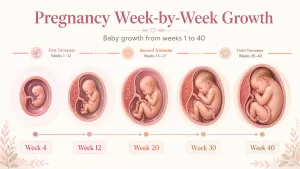
First Trimester: Pregnancy Weeks 1 to 13
The first trimester is one of the most important stages of pregnancy. Even though your baby is still very small, major development begins quickly. The brain, spinal cord, heart, limbs, and early organs start forming during these early weeks.
Many women also experience strong hormonal changes during the first trimester. Some may feel symptoms even before taking a pregnancy test, while others may have very few symptoms.
Week 1 of Pregnancy
In week 1, you are not technically pregnant yet. Pregnancy is calculated from the first day of your last menstrual period, even though conception usually happens around two weeks later.
Baby growth:
There is no embryo yet. Your body is preparing for ovulation and a possible pregnancy.
Symptoms you may feel:
You may experience your normal period symptoms, such as bleeding, cramps, bloating, tiredness, mood changes, or lower back discomfort.
What to do this week:
If you are trying to conceive, this is a good time to focus on healthy habits. Start taking prenatal vitamins with folic acid if recommended by your healthcare provider. Avoid smoking, alcohol, and unnecessary medications unless your doctor says they are safe.
Week 2 of Pregnancy
Week 2 is usually around the time your body prepares to release an egg. Ovulation may happen near the end of this week, depending on your cycle length.
Baby growth:
There is still no baby yet, but this is an important fertility window. If sperm meets the egg, fertilization may happen soon.
Symptoms you may feel:
Some women notice ovulation symptoms such as mild pelvic pain, increased cervical mucus, breast tenderness, or a slight rise in body temperature.
What to do this week:
If you are trying to get pregnant, tracking ovulation can help you understand your most fertile days.
Week 3 of Pregnancy
Week 3 is often when conception happens. A sperm may fertilize the egg, creating a single cell that begins dividing rapidly.
Baby growth:
The fertilized egg starts dividing into more cells as it moves toward the uterus.
Symptoms you may feel:
Most women do not notice pregnancy symptoms yet. Some may feel mild cramping, bloating, or slight spotting.
What to do this week:
Continue healthy eating, hydration, and prenatal vitamins. Avoid alcohol and smoking because early development begins soon after fertilization.
Week 4 of Pregnancy
By week 4, the fertilized egg may implant into the lining of the uterus. This is also the time when your period may be late.
Baby growth:
The embryo begins to form. The placenta also starts developing to support your baby during pregnancy.
Symptoms you may feel:
You may notice a missed period, mild cramps, light spotting, breast tenderness, fatigue, mood changes, or frequent urination.
What to do this week:
A home pregnancy test may show a positive result around this time, especially after a missed period. If the result is positive, book an appointment with your healthcare provider.
Week 5 of Pregnancy
Week 5 is when many women begin to feel more clearly pregnant. Pregnancy hormones rise quickly, and early symptoms may become stronger.
Baby growth:
The neural tube, which later becomes the brain and spinal cord, begins developing. Early heart development also starts.
Symptoms you may feel:
Common symptoms include nausea, fatigue, sore breasts, frequent urination, food aversions, mood changes, and increased smell sensitivity.
What to do this week:
Eat small, frequent meals if nausea starts. Keep simple snacks nearby and drink fluids throughout the day.
Week 6 of Pregnancy
By week 6, early pregnancy symptoms may become more noticeable. Some women may also have their first ultrasound around this period, depending on their medical situation.
Baby growth:
Your baby is growing quickly. The heart is developing, and tiny buds that will become arms and legs begin to appear.
Symptoms you may feel:
You may experience nausea, vomiting, sore breasts, tiredness, frequent urination, food changes, heightened smell, mild cramping, and light spotting. These symptoms are commonly described in early pregnancy guidance.
What to do this week:
Light spotting can happen in pregnancy, but bleeding should always be discussed with your doctor, especially if it is heavy, painful, or accompanied by dizziness.
Week 7 of Pregnancy
Your baby’s brain and face are developing quickly during week 7.
Baby growth:
The brain grows rapidly. The eyes, nose, mouth, and limb buds continue developing.
Symptoms you may feel:
Nausea, fatigue, food cravings, food aversions, bloating, constipation, mood swings, and tender breasts are common.
What to do this week:
Book your first prenatal appointment if you have not already done so. Your doctor may discuss blood tests, supplements, medical history, and early pregnancy care.
Week 8 of Pregnancy
By week 8, your baby is still tiny but growing fast. The body starts looking more defined.
Baby growth:
Arms and legs continue growing. Fingers and toes begin forming. The face becomes more recognizable, and major organs continue developing.
Symptoms you may feel:
Morning sickness may feel stronger. You may also feel tired, emotional, bloated, constipated, or sensitive to smells.
What to do this week:
If vomiting is severe or you cannot keep fluids down, contact your healthcare provider. Severe dehydration needs medical attention.
Week 9 of Pregnancy
Week 9 is an active stage of early development.
Baby growth:
Your baby’s arms grow, elbows appear, toes become visible, and eyelids begin forming. The head is still large compared with the rest of the body.
Symptoms you may feel:
You may notice nausea, vomiting, fatigue, breast tenderness, acne, headaches, bloating, and mood changes.
What to do this week:
Focus on hydration. If plain water feels difficult, try soups, fruit, coconut water, or doctor-approved oral rehydration options.
Week 10 of Pregnancy
Your baby is now growing more rapidly, and many body parts continue taking shape.
Baby growth:
Fingers and toes are more distinct. The jaw, teeth buds, and bones continue developing.
Symptoms you may feel:
Nausea, constipation, fatigue, mild cramps, mood swings, and breast tenderness may continue.
What to do this week:
Continue prenatal care and follow your provider’s advice on scans and screening tests.
Week 11 of Pregnancy
Around this stage, the fetus begins to look more human in shape. The baby’s body is growing, and early movements may happen, although you cannot feel them yet.
Baby growth:
The embryo stage has passed, and your baby is now called a fetus. ACOG explains that fetal development continues with organ growth, movement, and important body system development.
Symptoms you may feel:
Nausea may still be present. You may also feel tired, bloated, emotional, or constipated.
What to do this week:
Gentle walking can help with digestion, mood, and energy if your doctor says it is safe.
Week 12 of Pregnancy
Week 12 is close to the end of the first trimester.
Baby growth:
Your baby’s organs, muscles, and bones continue developing. The baby may move arms and legs, although you still may not feel it.
Symptoms you may feel:
Nausea may begin to ease for some women. You may still have tiredness, bloating, headaches, or breast tenderness.
What to do this week:
This is a common time for first trimester screening, depending on your provider’s recommendations.
Week 13 of Pregnancy
Week 13 is usually considered the final week of the first trimester.
Baby growth:
Your baby’s body becomes more proportionate. The bones continue strengthening, and the intestines move into place.
Symptoms you may feel:
Some women begin to feel more energetic. Others may still experience nausea, constipation, headaches, or breast tenderness.
What to do this week:
As your appetite improves, focus on balanced meals with protein, fiber, fruits, vegetables, healthy fats, and enough fluids.
Second Trimester: Pregnancy Weeks 14 to 27
The second trimester is often more comfortable than the first trimester. Nausea may reduce, energy may improve, and your baby starts feeling more real as your belly grows and movements begin.
This trimester is also a major period of growth. Your baby’s bones harden, muscles develop, facial features become clearer, and movement becomes stronger.
Week 14 of Pregnancy
Week 14 marks the beginning of the second trimester.
Baby growth:
Your baby’s neck becomes more defined. Facial features continue developing, and the baby may make small movements. Mayo Clinic notes that red blood cells begin forming in the spleen around this stage.
Symptoms you may feel:
You may feel more energetic. Some women still experience nausea, round ligament pain, headaches, stuffy nose, or increased appetite.
What to do this week:
Start building gentle movement into your routine if approved by your doctor.
Week 15 of Pregnancy
Your baby is growing quickly, and the skeleton continues developing.
Baby growth:
Bones are developing and may soon become visible on ultrasound. The scalp hair pattern also begins forming.
Symptoms you may feel:
You may notice heartburn, mild swelling, headaches, back discomfort, or skin changes.
What to do this week:
Drink enough water, eat regular meals, and avoid standing up too quickly if you feel dizzy.
Week 16 of Pregnancy
By week 16, your baby’s movements are becoming more coordinated.
Baby growth:
The head becomes more upright. The eyes can move slowly, and the ears move closer to their final position.
Symptoms you may feel:
You may have backache, constipation, breast changes, nasal congestion, or mild pelvic discomfort.
What to do this week:
Consider wearing supportive clothing and comfortable shoes as your body changes.
Week 17 of Pregnancy
Your baby is becoming stronger and gaining more structure.
Baby growth:
The skeleton continues hardening, and the baby may move more actively.
Symptoms you may feel:
You may experience dizziness, back pain, stretch marks, heartburn, constipation, or increased vaginal discharge.
What to do this week:
Stand up slowly, eat nutrient-rich meals, and rest when needed.
Week 18 of Pregnancy
Week 18 is around the time some parents begin feeling the first tiny movements, especially if they have been pregnant before.
Baby growth:
Your baby’s ears are developing, and hearing continues to improve. Movement becomes stronger.
Symptoms you may feel:
You may feel back pain, leg cramps, heartburn, pelvic pressure, and mild swelling.
What to do this week:
If you feel small flutters, note them. These early movements may feel like bubbles, tapping, or light fluttering.
Week 19 of Pregnancy
Your baby’s skin begins developing more protection.
Baby growth:
A waxy coating called vernix starts forming to protect the baby’s skin.
Symptoms you may feel:
Round ligament pain, skin darkening, appetite changes, heartburn, and mild pelvic discomfort may appear.
What to do this week:
Use gentle moisturizers if your skin feels itchy or dry.
Week 20 of Pregnancy
You are halfway through a 40-week pregnancy.
Baby growth:
Your baby is growing fast, and movements may become easier to notice. This is also a common time for the detailed anatomy scan.
Symptoms you may feel:
Back pain, heartburn, leg cramps, increased appetite, and mild swelling are common.
What to do this week:
Ask your provider about the anatomy scan, placenta position, baby’s growth, and any follow-up tests if needed.
Week 21 of Pregnancy
Your baby continues practicing movement and swallowing.
Baby growth:
The baby may swallow amniotic fluid and move more actively.
Symptoms you may feel:
You may feel backache, heartburn, round ligament pain, leg cramps, and occasional Braxton Hicks contractions.
What to do this week:
Braxton Hicks contractions are usually irregular and mild. Call your doctor if contractions become regular, painful, or come with bleeding or fluid leakage.
Week 22 of Pregnancy
Your baby’s senses continue developing.
Baby growth:
Your baby may respond to sounds and movement. Facial features are becoming more defined.
Symptoms you may feel:
Back pain, pelvic discomfort, leg cramps, heartburn, and sleep changes may happen.
What to do this week:
Gentle stretching and good posture can help reduce muscle discomfort.
Week 23 of Pregnancy
Your baby’s lungs and brain continue developing.
Baby growth:
The lungs continue maturing, and your baby may practice breathing-like movements.
Symptoms you may feel:
You may notice mild swelling, increased discharge, lower back pain, and Braxton Hicks contractions.
What to do this week:
Wear comfortable shoes and elevate your feet if swelling is mild.
Week 24 of Pregnancy
Week 24 is an important growth stage. Your baby’s movements may feel stronger.
Baby growth:
The lungs, brain, and nervous system continue developing. Some babies may respond to light and sound around this stage.
Symptoms you may feel:
Heartburn, constipation, stretch marks, back pain, and trouble sleeping may continue.
What to do this week:
Your provider may discuss screening for gestational diabetes around this period, depending on local medical guidelines.
Week 25 of Pregnancy
Your baby is gaining weight and becoming more active.
Baby growth:
The baby’s startle reflex may develop. Hair, skin, and body fat continue changing.
Symptoms you may feel:
You may experience sciatica, heartburn, nasal congestion, leg cramps, or rib discomfort.
What to do this week:
Avoid sitting or standing in one position for too long. Change positions slowly and rest when needed.
Week 26 of Pregnancy
Your baby’s brain activity increases, and the lungs continue maturing.
Baby growth:
The baby’s eyes and lungs continue developing. Movements may become stronger and more noticeable.
Symptoms you may feel:
Rib pain, backache, swelling, insomnia, and frequent urination may become more common.
What to do this week:
Start thinking about childbirth classes, hospital options, birth preferences, and newborn essentials.
Week 27 of Pregnancy
Week 27 is the final week of the second trimester.
Baby growth:
Your baby’s brain, lungs, and nervous system continue maturing. Movement patterns may become more noticeable.
Symptoms you may feel:
Back pain, leg cramps, heartburn, sleep trouble, and stronger kicks are common.
What to do this week:
Ask your provider when and how to monitor baby movements during the third trimester.
Third Trimester: Pregnancy Weeks 28 to 40
The third trimester is the final stage of pregnancy. Your baby gains weight quickly, organs mature, and your body prepares for labor and delivery. The third trimester begins at 28 weeks and continues until birth.
Week 28 of Pregnancy
Week 28 marks the beginning of the third trimester.
Baby growth:
Your baby’s eyes may partially open, and the brain continues developing.
Symptoms you may feel:
Shortness of breath, back pain, leg cramps, swelling, heartburn, frequent urination, and sleep difficulty may appear.
What to do this week:
Your provider may ask you to pay closer attention to baby movements from this stage onward.
Week 29 of Pregnancy
Your baby is becoming stronger and more active.
Baby growth:
Your baby can kick, stretch, and make grasping movements.
Symptoms you may feel:
Constipation, hemorrhoids, fatigue, backache, and pelvic pressure are common.
What to do this week:
Eat fiber-rich foods, drink enough water, and speak to your provider if constipation becomes painful.
Week 30 of Pregnancy
Your belly is growing more, and daily activities may feel harder.
Baby growth:
Hair continues growing, and your baby keeps gaining fat.
Symptoms you may feel:
Trouble sleeping, heartburn, mood changes, Braxton Hicks contractions, and back pain may continue.
What to do this week:
Sleep on your side and use pillows to support your belly, back, and knees.
Week 31 of Pregnancy
Your baby enters a phase of faster weight gain.
Baby growth:
Most major development is complete, and your baby begins gaining weight more quickly.
Symptoms you may feel:
Breathlessness, frequent urination, pelvic pressure, backache, swelling, and fatigue are common.
What to do this week:
Eat smaller meals if heartburn is bothering you. Avoid lying down immediately after eating.
Week 32 of Pregnancy
Your baby may begin settling into a head-down position, although some babies still change position later.
Baby growth:
The bones are formed but still soft. The body continues storing fat.
Symptoms you may feel:
Pelvic pressure, Braxton Hicks contractions, fatigue, and sleep discomfort may increase.
What to do this week:
Start preparing your hospital bag slowly. Include basic documents, comfortable clothes, baby clothes, toiletries, and any items recommended by your hospital.
Week 33 of Pregnancy
Your baby is taking up more space in the uterus.
Baby growth:
The brain and immune system continue developing.
Symptoms you may feel:
Rib pain, swelling, heartburn, back pain, and stronger Braxton Hicks contractions may happen.
What to do this week:
Call your healthcare provider if you notice sudden swelling in the face or hands, severe headache, vision changes, or severe upper abdominal pain.
Week 34 of Pregnancy
Your baby’s lungs and nervous system continue maturing.
Baby growth:
Your baby keeps gaining fat, which helps with body temperature control after birth.
Symptoms you may feel:
Fatigue, pelvic pressure, back pain, frequent urination, and difficulty sleeping are common.
What to do this week:
Review your birth plan, emergency contacts, hospital route, and support system.
Week 35 of Pregnancy
Your baby is getting closer to birth size.
Baby growth:
The kidneys are developed, and the liver continues maturing.
Symptoms you may feel:
Increased pelvic pressure, Braxton Hicks contractions, swollen feet, lower back pain, and sleep problems may continue.
What to do this week:
Rest often and avoid standing for very long periods if swelling gets worse.
Week 36 of Pregnancy
Your baby may move lower into the pelvis. This is sometimes called lightening.
Baby growth:
Your baby continues gaining weight and practicing sucking and swallowing.
Symptoms you may feel:
Pelvic pressure, frequent urination, easier breathing for some women, backache, and stronger Braxton Hicks contractions are common.
What to do this week:
Your provider may check your baby’s position around this stage.
Week 37 of Pregnancy
Week 37 is considered early term.
Baby growth:
Your baby is close to fully developed, but the brain and lungs may still benefit from more time in the womb if there are no medical concerns.
Symptoms you may feel:
Pelvic pressure, mucus plug changes, increased discharge, backache, cramps, and irregular contractions may happen.
What to do this week:
Learn the difference between false labor and true labor. True labor contractions usually become stronger, longer, and closer together.
Week 38 of Pregnancy
Your baby is preparing for birth.
Baby growth:
Your baby continues gaining weight. The lungs, brain, and nervous system continue final development.
Symptoms you may feel:
Trouble sleeping, pelvic pain, frequent urination, backache, and nesting energy may appear.
What to do this week:
Keep your phone charged, hospital bag ready, documents accessible, and transport plan clear.
Week 39 of Pregnancy
Week 39 is considered full term.
Baby growth:
Your baby is ready for life outside the womb. Fat continues building under the skin.
Symptoms you may feel:
Pressure, cramps, backache, loose stools, increased discharge, and contractions may occur.
What to do this week:
Call your healthcare provider if your water breaks, contractions become regular, or you notice reduced baby movement.
Week 40 of Pregnancy
Week 40 is your due week, although many babies arrive before or after their due date.
Baby growth:
Your baby is fully developed and ready for birth.
Symptoms you may feel:
You may experience stronger contractions, pelvic pressure, back pain, fatigue, and other signs of labor.
What to do this week:
Stay in close contact with your healthcare provider. If your pregnancy continues beyond your due date, your doctor may discuss monitoring and next steps.
Common Pregnancy Symptoms by Trimester
Pregnancy symptoms can vary widely. Some women feel many symptoms, while others feel only a few. Both can be normal, but any severe or worrying symptom should be discussed with a healthcare provider.
First Trimester Symptoms
Common first trimester symptoms include nausea, vomiting, breast tenderness, fatigue, frequent urination, bloating, constipation, food aversions, smell sensitivity, mood changes, mild cramping, and light spotting. Early pregnancy symptoms such as sore breasts, mood swings, headaches, food changes, heightened smell, frequent urination, discharge, spotting, and cramping are commonly listed in pregnancy guidance.
Second Trimester Symptoms
Common second trimester symptoms include back pain, round ligament pain, heartburn, constipation, leg cramps, mild swelling, skin darkening, stretch marks, increased appetite, and the first noticeable baby movements.
Third Trimester Symptoms
Common third trimester symptoms include shortness of breath, frequent urination, back pain, pelvic pressure, swelling, Braxton Hicks contractions, heartburn, insomnia, and fatigue. Cleveland Clinic also lists shortness of breath, false contractions, and peeing more often as notable third trimester symptoms.
When to Call a Doctor During Pregnancy
Contact your healthcare provider urgently if you experience:
Heavy bleeding, severe abdominal pain, severe headache, vision changes, fainting, fever, painful urination, fluid leaking from the vagina, regular contractions before 37 weeks, sudden swelling in the face or hands, severe vomiting, chest pain, trouble breathing, or reduced baby movement after you have started tracking movements.
You should also call your doctor if something simply feels wrong. It is better to ask early than to wait and worry.
Healthy Pregnancy Tips for Every Week
A healthy pregnancy is not about being perfect every day. It is about making steady choices that support you and your baby.
Eat balanced meals with protein, whole grains, fruits, vegetables, healthy fats, and enough fluids. Take prenatal vitamins as recommended by your healthcare provider. Attend all prenatal appointments. Stay active if your doctor says it is safe. Avoid smoking, alcohol, and recreational drugs. Get enough rest. Manage stress with gentle routines, family support, and open conversations.
Pregnancy can also be emotional. You may feel excited, anxious, tired, sensitive, or overwhelmed at different times. These feelings are common. Speak to your partner, family, doctor, or a mental health professional if stress or sadness feels difficult to manage.
FAQs on Pregnancy Week by Week
How many weeks is a full pregnancy?
A full pregnancy is usually counted as 40 weeks from the first day of your last menstrual period. Pregnancy is divided into three trimesters, each lasting about 13 weeks.
When do pregnancy symptoms start?
Some women notice symptoms as early as week 4 or week 5, while others may not feel much until later. Common early symptoms include missed period, breast tenderness, nausea, fatigue, frequent urination, food aversions, and mood changes.
When does morning sickness usually begin?
Morning sickness often begins in the first trimester, commonly around weeks 5 to 6. It can happen at any time of the day, not only in the morning.
When can I hear my baby’s heartbeat?
A baby’s heartbeat may be seen or detected during an early ultrasound around 6 weeks in some pregnancies, depending on timing, equipment, and individual development. Always let your healthcare provider interpret ultrasound findings.
When will I feel my baby move?
Many women feel the first baby movements between weeks 18 and 22. First-time mothers may notice movement a little later. Early movements may feel like flutters, bubbles, or gentle taps.
Which week is the second trimester?
The second trimester usually begins at week 14 and continues through week 27.
Which week is the third trimester?
The third trimester begins at week 28 and continues until birth.
Is it normal to have cramps during pregnancy?
Mild cramping can happen in early pregnancy as the uterus changes. However, severe cramps, one-sided pain, heavy bleeding, dizziness, or pain that does not go away should be checked by a doctor.
Is spotting normal during pregnancy?
Light spotting can happen in pregnancy, especially early on. However, any bleeding during pregnancy should be discussed with your healthcare provider, especially if it is heavy, painful, or accompanied by clots.
What should I eat during pregnancy?
Focus on balanced meals that include protein, whole grains, fruits, vegetables, healthy fats, and enough fluids. Your doctor may also recommend prenatal vitamins, folic acid, iron, calcium, vitamin D, or other supplements based on your needs.
What are signs of labor?
Signs of labor may include regular contractions that become stronger and closer together, water breaking, lower back pain, pelvic pressure, bloody show, and cramps. Call your healthcare provider or hospital if you think labor has started.
Final Thoughts
Pregnancy changes week by week. Some weeks may feel exciting, while others may feel uncomfortable or emotional. That is normal. Your body is doing important work, and your baby is growing step by step.
This pregnancy week-by-week guide can help you understand what may happen from weeks 1 to 40, but your own pregnancy may not follow every detail exactly. Always follow your doctor’s advice, attend prenatal appointments, and ask questions whenever you feel unsure.
With the right care, support, and information, you can move through each stage of pregnancy with more confidence and peace of mind.